
Greek Pasta Recipes
THE ART OF GREEK CUISINE
- Greek Pasta Recipes
Explore Greek pasta through baked dishes, orzo, sauces, and family cooking notes. Find our published Pastitsio recipe and ideas for planning a shared meal.



1. Begin With a Greek Pasta Bake
A baked dish provides one starting point for exploring Greek pasta. Our published Pastitsio recipe brings several components into one preparation. Read the complete recipe to understand its ingredients, separate stages, and final assembly. The dish offers more to consider than the pasta shape alone.
Before cooking, identify which components are prepared separately and how they are brought together. Set out the equipment requested by the recipe and check the quantities. An assembled bake can be easier to organize when each stage is clear before you begin. Keep the recipe close enough to review the next step as you work.
2. Explore Orzo and Smaller Shapes
Greek pasta traditions also include smaller forms such as orzo. The Greek Ministry of Rural Development and Food’s pasta overview introduces regional varieties and describes orzo in home cooking, including giouvetsi. Use that reading to develop ideas, then choose a full recipe for the preparation you want to make.
Read whether the pasta is cooked separately or as part of the dish. Those methods involve different relationships between pasta, liquid, and the other ingredients. A small shape should not be assumed to follow the same instructions as a larger one. Follow the method for the specific product and recipe you have selected.
3. Match Pasta With Its Sauce
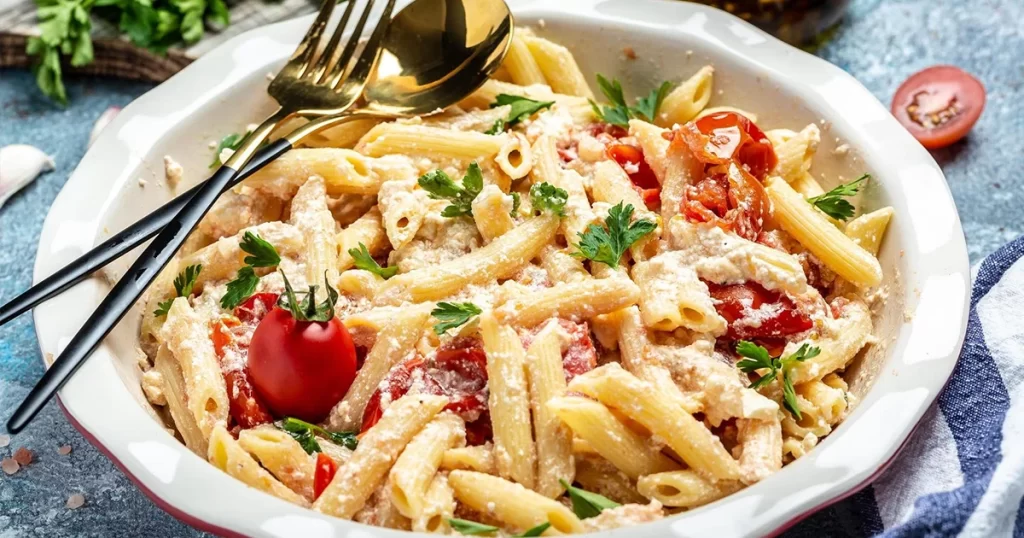
A Greek pasta recipe may bring attention to a sauce, a cooking liquid, or the ingredients mixed through the finished dish. Read how the method combines them and which part of the preparation controls the final texture. A sauce added at the end serves a different role from liquid used to cook the pasta.
When comparing recipes, note the proportions and the order of assembly. If you change a component, record what you used and the result. Keeping those observations with the recipe helps you understand the preparation later. A clear record is more useful than assuming that every pasta dish can be adjusted in the same way.
4. Consider Vegetables and Other Ingredients
Greek pasta can be explored through the ingredients that accompany it. Vegetables, herbs, cheese, or other additions give different preparations distinct roles at the table. Read the whole ingredient list before deciding which recipe fits your meal. A title may highlight one component while leaving several others to the method.
The vegetable guide and vegetarian guide offer related ideas. A category connection does not make every pasta recipe suitable for every dietary preference. Check the actual ingredients and describe any adaptation clearly when cooking for others or sharing your notes.
5. Plan the Rest of the Table
A Greek pasta main can be considered alongside a salad or another straightforward accompaniment. Think about how much attention the main preparation needs and choose the rest of the meal accordingly. A manageable menu helps you organize the cooking without having several unfamiliar tasks compete for attention at once.
The salad guide provides another place to explore textures and serving styles. Compare the complete recipes and their portion information before deciding on quantities. A shared meal is easier to plan when you understand both the main dish and the food that will be served around it.
6. Record a Greek Pasta Family Version
Family versions of a Greek pasta dish may differ in ingredients, assembly, or serving style. Ask which details matter to the person who makes it and record them alongside the measurements. A memory of a particular meal adds context, while a clear method allows someone else to understand the preparation.
Visit the recipes overview for the site’s food-sharing invitation. If you contribute a recipe, include complete steps and identify any adaptations or source material. Keep your household’s version distinct from a broad claim about how every family prepares the dish. Clear records leave room for different food traditions.